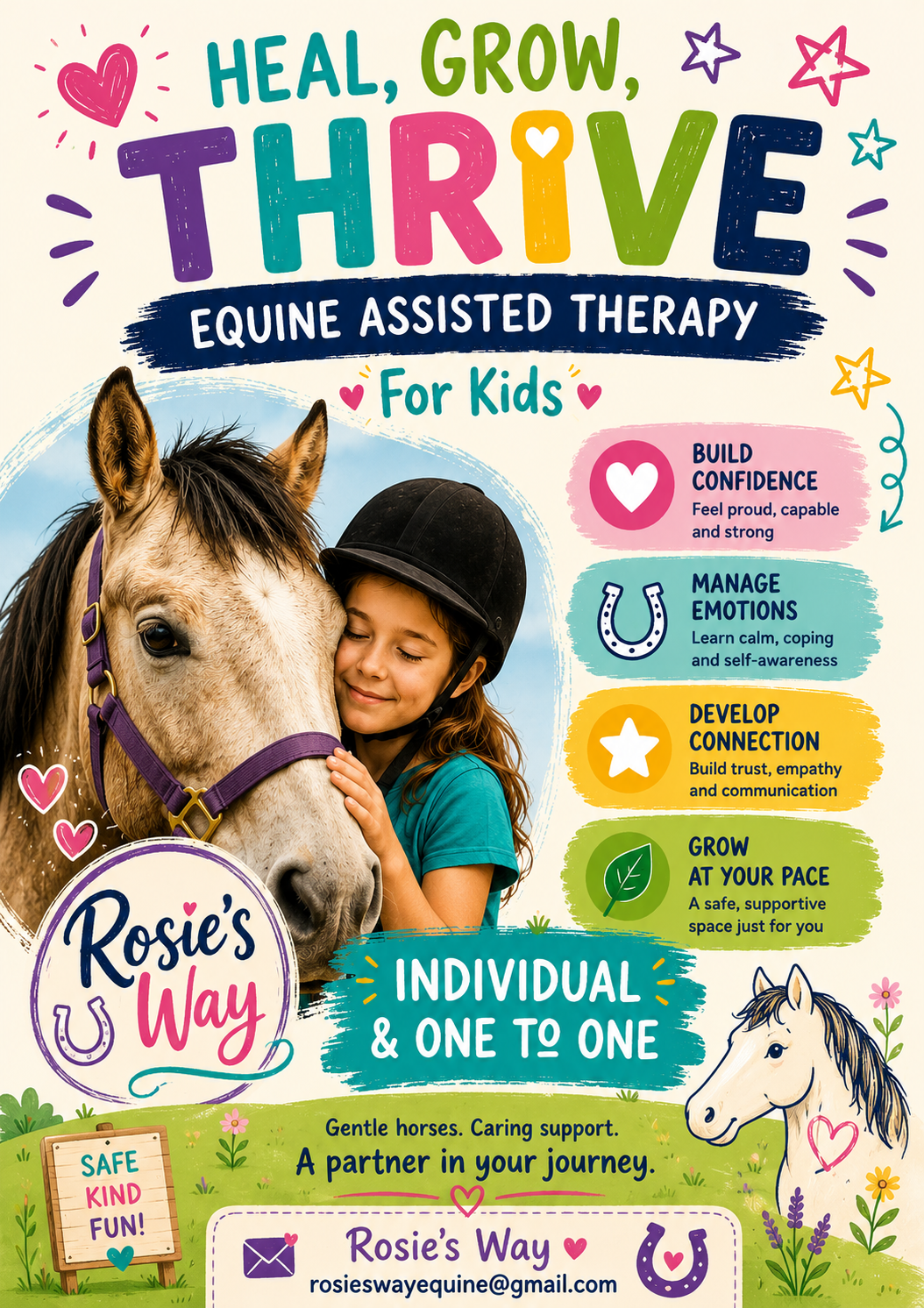

EQUINE-ASSISTED THERAPY
CHILDREN and TEENS
Equine Assisted Therapy for Children and Young People (Ages 4–17)
Supporting Mental Health, Confidence, and Emotional Regulation Through Horses and Riding
Our Equine Assisted Therapy programme supports children and young people aged 4–17 through a combination of ground based equine therapy, sensory regulation activities, and therapeutic riding. Horses offer calm, consistent feedback that helps children develop emotional regulation, confidence, communication skills, and resilience.
Sessions are facilitated by trained equine practitioners using a trauma informed, child centred approach that prioritises safety, consent, and wellbeing.
Who This Programme Supports
This service is designed for children and young people experiencing:
• Anxiety, stress, or emotional dysregulation
• Low confidence or self esteem
• ADHD, Autism or Neurodivergent
• Social or communication challenges
• Trauma related symptoms
• Behavioural or sensory regulation difficulties
• Grief, loss, or major life changes
• School based or peer related challenges
What Makes Equine Assisted Therapy Effective
Natural Regulation
Horses help children settle their nervous systems through rhythm, movement, and calm presence. Riding provides additional sensory input that supports balance, focus, and emotional regulation.
Honest, Non Judgemental Feedback
Horses respond to energy, intention, and behaviour. This helps children understand how their actions influence others and supports development of empathy and social awareness.
Confidence Through Achievement
Learning to ride, lead, groom, or complete tasks with a horse builds confidence, capability, and pride.
Safe, Supportive Environment
Children experience success at their own pace, with choice based participation and clear boundaries that help them feel secure.
Programme Structure
Ages 4–7
Focus on sensory regulation, confidence building, gentle riding, and early emotional awareness. Activities include:
• Grooming and touch based sensory work
• Leading and simple communication tasks
• Short, supported riding sessions
• Grounding and rhythm based exercises
Ages 8–17
Focus on emotional regulation, communication, resilience, and skill development. Activities include:
• Grooming and horse care routines
• Advanced groundwork and connection exercises
• Leadership and boundary setting tasks
• Leading, obstacle courses, and problem solving
• Riding lessons with therapeutic goals
• Reflection and emotional awareness activities
• Riding sessions tailored to personal goals
• Reflective practice and wellbeing strategies
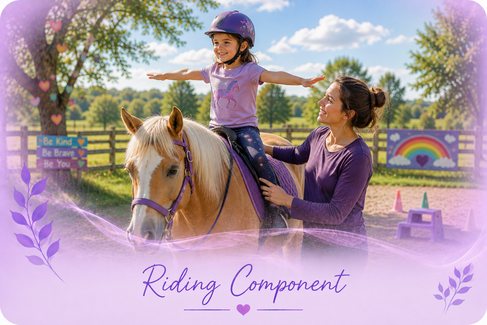
Riding Component
Riding is integrated as a therapeutic tool rather than a sport. It supports:
• Sensory integration
• Core strength and balance
• Confidence and mastery
• Emotional regulation through rhythm and movement
• Focus, sequencing, and task completion
All riding is supervised, safety checked, and tailored to the child’s ability and comfort level. Riding will only be in an arena environment with the signed consent of a legal guardian
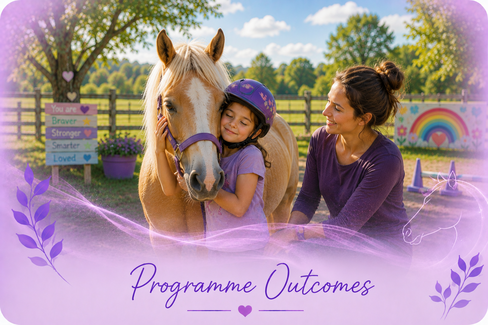
Programme Outcomes
• Improved emotional regulation
• Increased confidence and self esteem
• Stronger communication and social skills
• Reduced anxiety and stress
• Enhanced resilience and problem solving
• Better focus and engagement
• Healthy relationship building
• Greater body awareness and coordination
Session Options
• Individual therapy sessions
• Ongoing weekly programmes
• Short term intervention blocks
• School based referrals
• Parent/whānau involvement options
Enrolment
We welcome referrals from parents, caregivers, schools, counsellors, and health professionals. Programmes are tailored to each child’s needs following an initial consultation.
Safety and Consent
Your child’s physical and emotional safety is our highest priority.
• All sessions are choice based - children can opt in or out of riding.
• Horses are carefully selected for temperament and suitability.
• Helmets and safety gear are provided.
• Parents are welcome to observe from a designated area.
• Practitioners follow trauma informed, child centred practice.
• Clear boundaries and predictable routines help children feel secure.
What Parents Need to Know
Clothing
• Closed toe shoes or boots
• Comfortable clothing suitable for movement
• Weather appropriate layers
Before the Session
• Ensure your child has eaten and is hydrated
• Let us know about any concerns or triggers
• Neurodiversity (ADHD, ASD, sensory needs)
Sessions are adapted to each child’s developmental stage, learning style, and comfort level.